A group of 24 Nigerian girls who were abducted from their boarding school over a week ago have been released, the country’s president says.
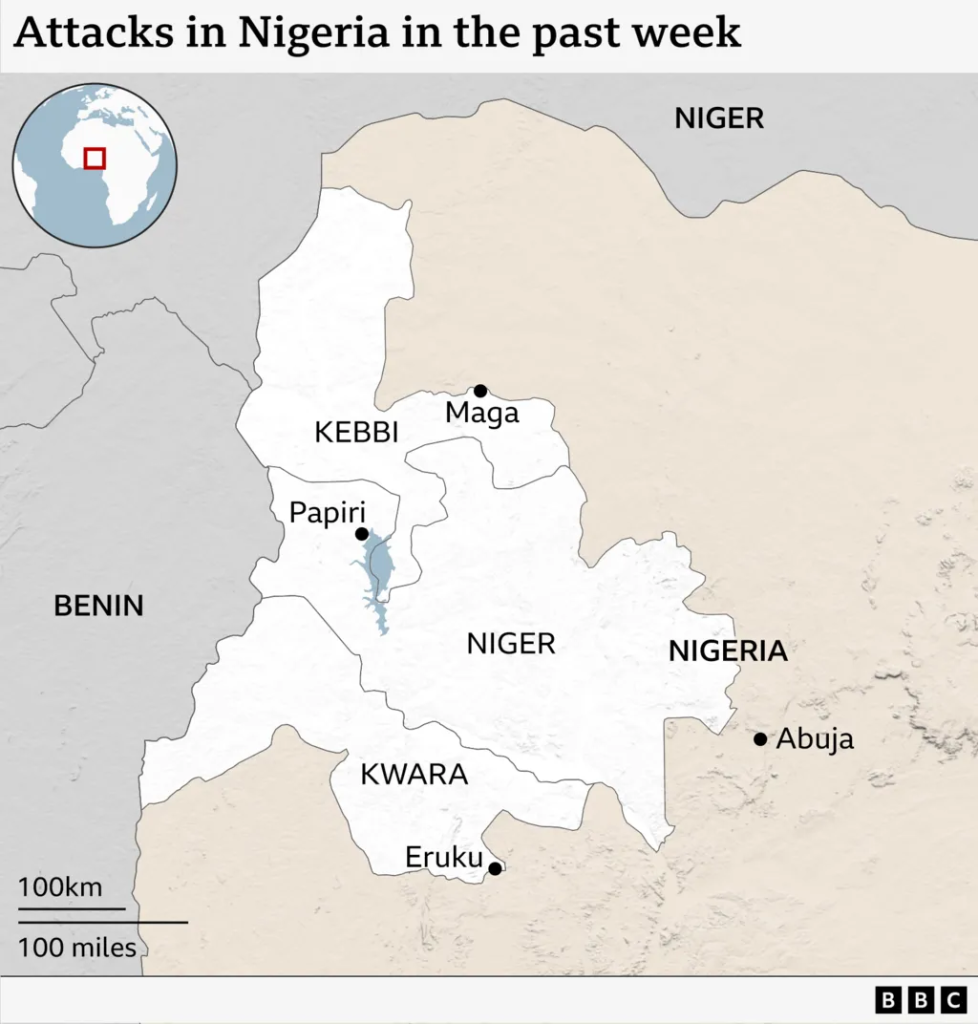
Armed assailants stormed the school in Nigeria’s Kebbi State on 17 November, killing two members of staff and abducting 25 students. One was able to escape soon after.
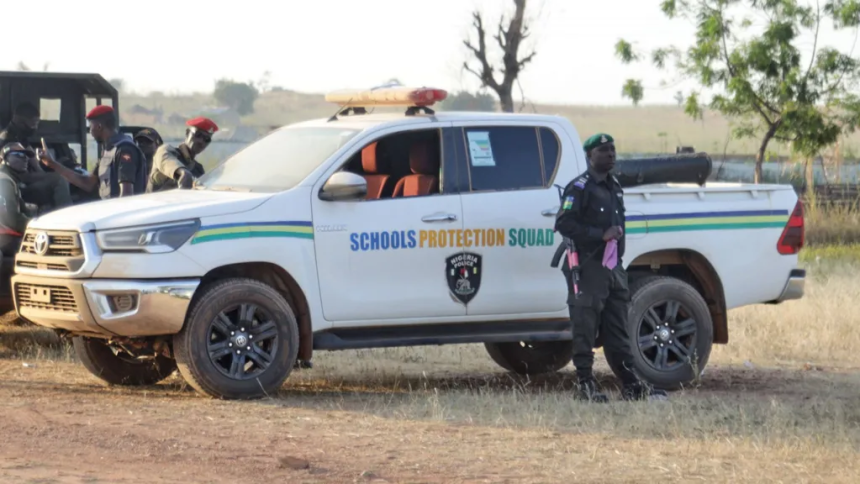
Nigerian President Bola Tinubu praised security forces for their “swift response” to the kidnapping – although the circumstances of the girls’ release remained unclear.
Africa’s most populous nation suffered a spate of abductions last week – with more than 250 children abducted from a Catholic school last Friday still missing, according to the school authorities.
Friday’s kidnapping, in Niger State, has been described as one of the worst mass abductions in Nigeria’s history. However, some officials say the number of missing children has been overstated.
Addressing the earlier abduction in Kebbi State, Bayo Onanuga, a special adviser to the president, confirmed on Tuesday that all the kidnapped schoolgirls had been accounted for.
Onanuga’s statement said the attack had triggered copycat kidnappings.
President Tinubu said more personnel would be deployed to “vulnerable areas to avert further incidents of kidnapping”.
In a post on X, he wrote: “The Air Force is to maintain continuous surveillance over the most remote areas, synchronising operations with ground units to effectively identify, isolate, disrupt, and neutralise all hostile elements.”
More than 1,500 children have been abducted from Nigerian schools since 2014, when 276 girls were taken during the infamous Chibok mass abduction.
The kidnapping of people for ransom by criminal gangs, known locally as bandits, has become a major problem in many parts of Nigeria.
In the north-east of the country, jihadist groups have been battling the state for more than a decade.
On Friday, at least 300 children and staff were abducted from St Mary’s, a Catholic boarding school in Niger state, according to the Christian Association of Nigeria (Can). The organisation says at least 250 people remain unaccounted for.
On Wednesday, Niger state governor Umar Bago told the BBC that 11 St Mary’s pupils had been found in a “farm settlement” and rescued by security forces. He refused to give any further details about the operation.
Bago also cast doubt on Can’s statement that 300 people had been abducted, saying the organisation had not presented any reliable data.
“They should declare their register available to the authorities,” he said.
Niger State’s police commissioner has also questioned Can’s figures.
Meanwhile, the head of Can in Niger state, Bishop Bulus Dauwa Yohanna, who is also responsible for St Mary’s school, has criticised the government’s response, saying it is making “no meaningful effort” to rescue those still missing.
The abduction at the school was the third to hit Nigeria in a week, forcing President Bola Tinubu to cancel his trip to the G20 summit, held in South Africa at the weekend, to deal with the crisis.
Dozens of people seized from a church in Kwara state, south of Niger, have since been freed.
UN education envoy Gordon Brown called on the international community to “do our utmost” to support efforts to return the abducted children.
Brown, a former UK prime minister, said: “It’s also incumbent on us to ensure that Nigerian schools are safe spaces for learning, not spaces where children can be plucked from their classroom for criminal profit.”
Earlier this month, US President Donald Trump threatened military action, accusing the Nigerian authorities of failing to protect Christians from attacks from Islamist militants.
The Nigerian government has called claims that Christians are being persecuted “a gross misrepresentation of reality”.
The BBC was told that the schoolgirls abducted from the Government Girls Comprehensive Senior Secondary School (GGCSS) in Kebbi are Muslim. An official has said that “terrorists attack all who reject their murderous ideology – Muslims, Christians and those of no faith alike”.
Organisations monitoring violence say most of the victims of the jihadist groups are Muslim because most attacks happen in the majority-Muslim north of the country.
Additional reporting by Wedaeli Chibelushi